



Family nutrition
The “Witching Hour”

By Jennifer Franzen, RDMay 27, 20264 min read
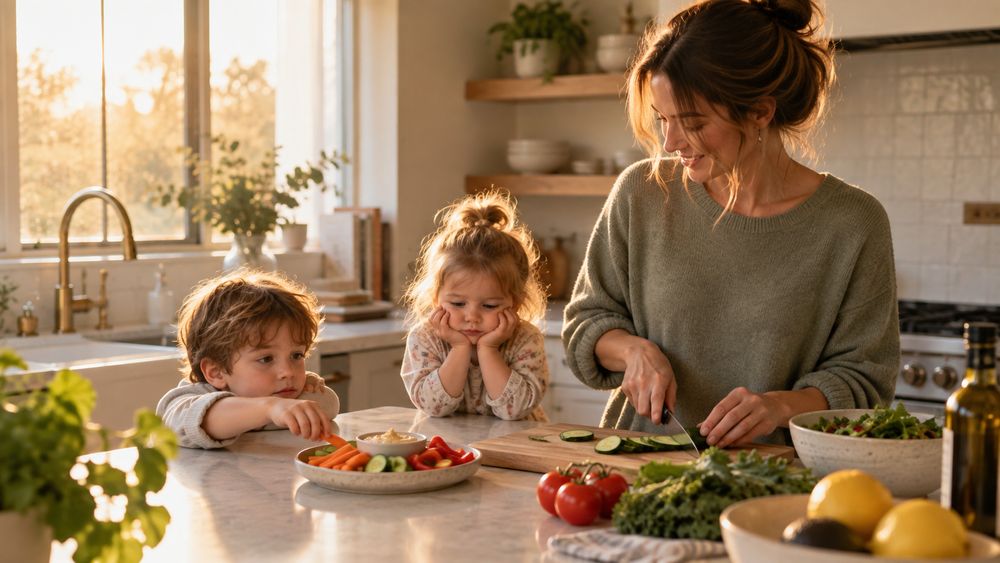
I’ll never forget the feeling at 4:00 pm when my children were young. I often called it the ‘witching hour’. Not sure why I used that term, exactly, but it never failed. It was a time of chaos, whining, begging, and moody children. They often were tired from the long day, sometimes without naps or coming home worn out from school. I vividly feel my stress levels going up knowing that I needed to produce a nutritious dinner for the family, always with the goal of completing it BEFORE they hit this state.
By the time dinner rolled around, I either gave up and made an easy, quick meal a bit more empty in nutrition, or they weren’t interested in the nutrient-dense meals I took the extra time to make. They would end up not sitting still and often were displeased with the wonderful array of food groups that I was offering them. They’d pick at their food, complain, turn up their nose, and beg to leave the table. Sound familiar?
“I’m told a person is often never alone, and I would imagine you may have been through this on more than one occasion. And let me say this out loud: YOU ARE NOT ALONE.”
It wasn’t until I realized building a routine around snacks between meals and awareness of the time we ate dinner that I started to see some major improvements. Building routine and consistency is the foundation of starting. Here are some ideas that could be tools you may want to implement at home.
Why the “Witching Hour” happens
It’s not that your children are little monsters looking to upset you and stress you out. Some real reasons why that time between 3 and 5 can be so challenging are that your children are hungry, exhausted, and often overstimulated by that time in the day.
Become aware of the patterns. When does their mood or behavior change? How long has it been since they last ate? Did they rest that day? Could they be overstimulated? As you begin to build awareness, begin to make small changes to build more routine and consistency.
It is also important to understand that children need to eat more than adults, and having a wholesome snack during that time will not ruin their dinner. A balanced snack can help stabilize energy and mood before dinner.
Shift the goal of dinner
Offering food from the food groups at dinner is the goal here. Aim for one option of protein, vegetable, fruit, and complex carbohydrate (beans, whole grains, brown rice, etc).
Give them exposure to the food groups, and let how much and whether they eat what is on the table be up to them.
Create a predictable evening rhythm
- Consistent snack time and dinner time.
- Outdoor play to decompress from the overstimulation they may have from their day, especially if your child is in school or day care.
- Notice when you see the most behavior and mood changes. Could it help to offer a snack consistently 1 to 2 hours before dinner, or could you move dinner time up?
Smart pre-dinner snacks
One of the best times to help children eat their vegetables is while you are preparing dinner. I have often had children hanging on my legs or glued to my hip as I was trying to prepare a meal.
I got in the routine of setting out some cut-up raw vegetables with an option of dip while I was preparing the meal, and it worked like magic. They snacked on veggies while I cooked, and the best part was that when it came time to sit down for dinner, I didn’t have to worry if they weren’t interested in the vegetables because I knew they got a snack of vegetables before supper!
Other great options:
- Apples with a nut butter, like peanut butter or almond butter
- Yogurt with some berries
- Vegetables with dip
- Hummus with crackers
These provide protein or fiber to help the body slow down the digestion of the carbohydrate in that snack. This is key to helping stabilize their blood sugar, which will improve their mood and behaviors.
Reduce mealtime pressure
As you prepare your dinner, always offer at least one “safe” food. By this, I mean something that you know your child loves and will feel safe with, because if all the other food offered is unfamiliar, they know there is something there that they feel comfortable with. It might be something like having noodles or buns available at each meal.
Consider having family-style meals and letting your child scoop food onto their plate. It gives them a sense of independence while offering them some freedom to choose from the options.
Avoid bribing and negotiating to get your child to eat something. Our role as parents is to offer what to eat, when to eat, and where to eat. A child’s role is to decide how much to eat and whether to eat.
It can be helpful to have a small plate on the side that a child can use for foods they do not want to eat. You can call it a “no thank you plate”. This allows them to feel comfortable having an unfamiliar food on their plate, yet gives them safety in knowing that if they choose not to eat it, they can use their table manners and say “no thank you” while placing that food on the small plate.
Family meals around a table
By far the most important part in helping your child with their food is providing meals where you can enjoy each other’s company with the food TOGETHER, around a table. If you’re not sitting, why should they sit? Be intentionally present and put away all distractions (tv, phones, etc).
Having family meal times together offers a safe environment. It allows them to observe you with food and helps them become more curious about food. Talk about the food and encourage the use of their senses to explore the food, even if they don’t want to eat it.
If dinner feels messy or chaotic right now, you are not alone. Healthy family meals are not built in one perfect evening. They are built through small, steady habits practiced over time. One consistent snack routine, one calmer dinner, one less stressful evening at a time. Progress over perfection matters deeply here. Children thrive in environments that feel predictable, connected, and safe, not perfect. Start small, stay consistent, and trust that those little moments around the table truly add up.
— Jennifer